This classic tale of witchcraft is the most beautiful horror film I have ever seen. A young American woman Suzy Bannion (Jessica Harper) is accepted to a prestigious dance academy in Germany only to find it is a meeting place for a coven of witches. Based on the essays of Thomas Dequincy’s Suspiria de Profundiis. Director Dario Argento takes the first three essays of “The three mothers,” about ancient and powerful witches who live in various places of the world to spread their evil to create a film like no other. It is like a live-action Disney horror film of brilliant reds, green and blues filling the screen. A voice-over sets the uneasy tone of the film as he tells you over a black screen that Suzy Bannion has taken a plane from New York City to attend an exclusive dance academy in Germany. Suzy Bannion arrives at the airport and steps out into a driving rainstorm to hail a taxi. A cab arrives and there is a language barrier. Suzy shows the driver the schools brochure and she is off to the academy. She arrives at the academy to find a young woman at the doorway, screaming at someone inside. She hears pieces of the conversation, which become a helpful clue after the girl is murdered. The killer chases the girl through a dark forest until she arrives at a friend’s house. The friend tries to calm her down and leaves the girl to meet her death. Suzy immediately notices everyone at the academy look likecharacters from a dark Brothers Grim fairytale. The tall, gangly students are represented in stark angry colored lights. The ballet instructor is dressed all in black. The head mistress is a serious looking woman with bright painted red lips. The servant is a hunchback deaf-mute servant, and the Russian head cook is a knife-wielding lunatic. Suzy falls deeper into the threat of the coven when she suffers a nosebleed in ballet class causing her to collapse. The cause of the nosebleed is explained as a mild internal hemorrhage. Soft blues and pinkish reds represent Suzy, as she seems to float on air when she walks. Her discovery of the secret is handled in a sleep-like haze with red twinkling lights following her as she runs from the dying queen witch in the end. Scary and gory in 1977, the film looks fake and silly by today’s standards. The blood and gore looks like bright melted red crayons or wax. A scene stands out where a student is chased into a room full of piano wire, which doesn’t cut her as she thrashes around in the middle of it. The effect looks as if a giant slinky is attacking her. The film, despite all this is still a lot of fun to see with your friends on a Saturday night with the lights off and lots of popcorn. Digitally re-mastered. Rated R.
Wednesday, March 16, 2011
Suspiria- a Film Between Dreamlike Imagery and Exploitative Shock

Suspiria- a Film Between Dreamlike Imagery and Exploitative Shock
This classic tale of witchcraft is the most beautiful horror film I have ever seen. A young American woman Suzy Bannion (Jessica Harper) is accepted to a prestigious dance academy in Germany only to find it is a meeting place for a coven of witches. Based on the essays of Thomas Dequincy’s Suspiria de Profundiis. Director Dario Argento takes the first three essays of “The three mothers,” about ancient and powerful witches who live in various places of the world to spread their evil to create a film like no other. It is like a live-action Disney horror film of brilliant reds, green and blues filling the screen. A voice-over sets the uneasy tone of the film as he tells you over a black screen that Suzy Bannion has taken a plane from New York City to attend an exclusive dance academy in Germany. Suzy Bannion arrives at the airport and steps out into a driving rainstorm to hail a taxi. A cab arrives and there is a language barrier. Suzy shows the driver the schools brochure and she is off to the academy. She arrives at the academy to find a young woman at the doorway, screaming at someone inside. She hears pieces of the conversation, which become a helpful clue after the girl is murdered. The killer chases the girl through a dark forest until she arrives at a friend’s house. The friend tries to calm her down and leaves the girl to meet her death. Suzy immediately notices everyone at the academy look likecharacters from a dark Brothers Grim fairytale. The tall, gangly students are represented in stark angry colored lights. The ballet instructor is dressed all in black. The head mistress is a serious looking woman with bright painted red lips. The servant is a hunchback deaf-mute servant, and the Russian head cook is a knife-wielding lunatic. Suzy falls deeper into the threat of the coven when she suffers a nosebleed in ballet class causing her to collapse. The cause of the nosebleed is explained as a mild internal hemorrhage. Soft blues and pinkish reds represent Suzy, as she seems to float on air when she walks. Her discovery of the secret is handled in a sleep-like haze with red twinkling lights following her as she runs from the dying queen witch in the end. Scary and gory in 1977, the film looks fake and silly by today’s standards. The blood and gore looks like bright melted red crayons or wax. A scene stands out where a student is chased into a room full of piano wire, which doesn’t cut her as she thrashes around in the middle of it. The effect looks as if a giant slinky is attacking her. The film, despite all this is still a lot of fun to see with your friends on a Saturday night with the lights off and lots of popcorn. Digitally re-mastered. Rated R.
Asian Stereotypes in Film History

credit
Since the beginning of film, directors have manipulated the art to portray what they want; the concept of art imitating reality hasn’t always been encouraged. In fact, stereotypes of ethnic groups have run amuck in the industry, despite how truthful these stereotypes really are. For example, D.W. Griffith’s The Birth of a Nation is full of racist ideals about African Americans and promotes awful stereotypes that led to riots and hatred when it was first released. Another group of people that has taken a second-class status in comparison to Caucasians in the film industry is that of Asians. While there have been some successful Asian actors to take leading roles in early film, the majority of them were cast in small, non-speaking roles such as servant, laundry man, and shopkeeper. Even in movies where the plot centered on an Asian person, Caucasians were cast in those roles. In movies such as Broken Blossoms (1919), Lady from Chungking (1942), Three Came Home (1950), Love is a Many Splendored Thing (1955), Blood Alley (1955), and The World of Suzie Wong (1960), stereotypes of Asians are all over the place, to include the four main stereotypical roles: Dragon Lady, Yellow Peril, Charlie Chan and Lotus Blossom, and it is evident from these films how society viewed this group of people.
D.W. Griffith’s Broken Blossoms is a silent film that is a perfect example of how Asians were viewed during this time period. The film is about a “yellow man,” Cheng Huan, who leaves his home country in order to teach white men about the Buddhist message of peace. The title character is obviously an Asian man, but audiences are not given any specificity as to what exact nationality he is; “distinctions among Asians of different nationalities went unrecognized” (Shah 3). The interesting part about the main character is that although the story is about an Asian man, the actor playing this role, Richard Barthelmess, is Caucasian, thus illustrating Hollywood’s reluctance to give a leading role to a person of Oriental background. This practice of making white actors look Asian was called “yellowface.” One justification offered by Hollywood for yellowface “was that white actors simply made better ‘Orientals’ than Asian actors did. This was probably true, since the white actors were often actively trying to play ‘Orientals,’ trying to play the stereotypes, while the Asian actors were perhaps trying to play humans” (Ito 3). It is also important to note that there were some Asian actors in this film, such as the shopkeeper who sold the flowers, but none played speaking roles and virtually faded into the background.
Once settled in Europe, Cheng becomes discouraged and submits himself to the role of “chink storekeeper,” a main stereotypical role that directors tended to give people of Oriental background. Later on, he meets and falls in love with Lucy Burrows, a girl whose father beats her. Being the established Asian, Cheng is subservient and tends to her every need, dressing her in silks and watching over her until she gets better. Despite the gratitude and perhaps love she feels for him, she asks him, “What makes you so good to me Chinky?” While the term “chinky” may not have been as derogatory as it is today, Lucy could have just as well referred to him by his name instead of such a stereotypical title. When Lucy’s father Battling Burrows finds out that she has taken refuge with Cheng, he is outraged: “A Chink after his daughter? He’ll learn him.” “In Hollywood, Asian men were depicted as menacing, predatory, and lusting after white women. These images, in films such as Broken Blossoms and The Cheat… helped perpetuate the Yellow Peril stereotype of Asian males” (Shah 3). The next title states, “Above all, Battling hates those not born in the same country as him,” once again illustrating the racism against Asians that was rampant in that day.
Another film that portrays the Asian culture through stereotypes is William Nigh’s Lady from Chungking. Anna May Wong plays Madame Kwan Mei, a Chinese aristocrat who has been captured by Japanese troops during early World War II. She and other prisoners who are forced to work in slave labor plot to kill the Japanese general, who is incidentally played by Harold Huber, a white man. “During much of the so-called Golden Age of Hollywood, scores of actors, big-name actors, had no moral qualms about taking roles that required them to ‘slant’ their eyes, do that funny walk, and practice their embarrassingly poor ‘Oriental’ accents’” (Ito 2). As his lady companion, Madame Kwan Mei becomes the diversion the Chinese need to put their plans into action. She dresses seductively and persuades the general that she will remain at his side and that she will submit to his every desire. “Moviegoers were fed erotic images of the China Doll as concubine, supple in cheongsam attire, secret danger cocked in her eyes, graceful as a snow leopard” (Nga 2).
In this film, although Wong is ultimately the hero, she is often depicted as a cold-hearted Dragon Lady, one of the main stereotypes found to describe Asian actors. “A journalist reporting on the Chinese Empress Tsu-hsi coined the term when he referred to the monarch as a ‘reptilian dragon lady who arranged the poisoning, strangling, beheading or forced suicide of anyone who challenged her rule’” (Shah 3). The men she leads question her motives, especially when she sits by at the general’s side and quietly watches the elderly men from her group be executed. “In Hollywood films, Asian women were depicted as diabolical, sneaky and mean, but with the added characteristics of being sexually alluring and sophisticated and determined to seduce and corrupt” (Shah 3). By this time, a few Asian actors were able to land leading roles, but even they were tired of the stereotypes they had to play. In Thi Thanh Nga’s article “The Long March from Wong to Woo: Asians in Hollywood,” he writes:
Anna May Wong explains her reason for leaving Hollywood- “I was tired of the parts I had to play. Why is it that on the screen the Chinese are nearly always the villain of the peace, and so cruel a villain- murderous, treacherous, a snake in the grass. We are not like that. How could we be, with a civilization so many times older than that of the West? We have our rigid code of behavior, of honor. Why do they never show those on the screen?” (1)
Another stereotype that is seen throughout the film is the brutality of the Japanese, which was a result of the war. In the first scene, a Japanese soldier beats a child because he is not working in the fields. “Between 1931 and the end of World War II, U.S. fear of Japan as a growing imperial power led to images of cruel Japanese soldiers abusing the Chinese and other Asian populations” (Shah 4).
Continuing with World War II propaganda, Jean Negulesco’s Three Came Home is another film that endorses cruel stereotypes of the Japanese. Claudette Corbert stars as American writer Agnes Newton Keith in her true account of how she survived a Japanese concentration camp. The Japanese soldiers throughout this film are portrayed as cruel, apathetic men, and there are an abundance of scenes that elucidate this image. As Mrs. Keith and her son are boarding the truck to take them away from their home to the prison camp, she struggles to get her suitcase onto the landing; she looks up at the soldier there, perhaps wondering if he will help her. He only looks back down at her, a blank expression on his face, and it is then that she realizes their inability to have compassion. In another scene, Betty, Mrs. Keith’s close friend, makes fun of another woman in front of a Japanese guard; thinking that she is making fun of him, he beats her mercilessly. When Mrs. Keith makes the accusation that a Japanese soldier assaulted her one night in the yard, she is beaten in order to be persuaded to sign a statement renouncing her allegation. The director of this film also reinforces the soldiers’ brutality by doing a few scenes that cut quickly from one to the next, showing Mrs. Keith being slapped or pushed around.
The interesting part about Three Came Home is that the Japanese soldiers’ cold-heartedness is contrasted with the Japanese colonel’s humanity. Despite his position, Colonel Suga, played by Sessue Hayakawa, quickly becomes a relatively likable character in the beginning of the film when he meets Mrs. Keith; he has requested to meet her because he has read her book and admires her writing. Later on, he has tea with her at the concentration camp and even turns to her for sympathy when he discovers his family has been killed in the bombing of Hiroshima. The most poignant scene that illustrates Colonel Suga’s humanity is when he takes Mrs. Keith’s son and a few other children to his house to eat. This move by Negulesco to portray a kind-hearted Japanese authority figure and move away from the harsh Asian stereotypes reveals the progress Hollywood was making towards a more racially-friendly mindset. As a result, Hayakawa, although one of the most successful Asian actors during this time period, was able to elevate his career even more. “Like other actors, had Hayakawa been no more than a victim of a stereotype, had he not been able to differentiate himself from the simplicity of an accepted idea, he likely would not have enjoyed the success that he did” (Kirihara 92).
Henry King’s Love is a Many Splendored Thing is another film that takes Asian stereotypes into a different direction. In this movie, a Eurasian doctor named Han Suyin meets and falls in love with Mark Elliot, a war correspondent. Once again, a Caucasian woman, Jennifer Jones, is cast in the leading role, revealing Hollywood’s lack of confidence in an Asian actress to do the job.
Another justification was that there just weren’t any ‘qualified’ or talented Asian or Asian-American actors… Of course, this type of thinking is a catch-22 for so many Asian actors who can’t find work because they lack experience, and can’t get experience because all the good Asian roles go to white actors. (Ito 3)
Suyin is initially portrayed as an antithesis to the typical Asian woman. She is a doctor and even seems to preside over some of her male colleagues. She does not seek a husband to take care of her and does very well on her own. She wisely refuses to go out with Mark because she has already been hurt in the past; her husband was a general who was killed in war. She tries to remain steadfast to her convictions but eventually does give in. As she falls in love with Mark, the stereotype of Asian women being subservient comes out in this film by the way she gives in completely to him. The end of World War II generated a Lotus Blossom stereotype, an “Asian woman as submissive, meek and ready to serve a man’s every need” (Shah 4), and Suyin definitely falls into this category. The Lotus Blossom stereotype stems from the loyalty of a Japanese prostitute in Puccini’s opera “Madam Butterfly.” A naval officer fakes a wedding to live with Cho-Cho-San, and when he leaves for home, she remains faithful to him and raises his son (Shah 4). Despite the fact that she clearly has an important job, she takes off from work in order to spend time with him, to remain loyal to him. When he asks her to stay longer, she does so without even a second thought. Her work-conscious attitude has been transformed by love.
As a result of their interracial relationship, Suyin ultimately becomes the epitome of a stereotypical Asian woman. An interracial relationship during this time was greatly frowned upon, and this is shown by the attitudes of Dr. Sen and Mrs. Palmer-Jones, whose husband runs the hospital. Dr. Sen tells Suyin that she has lost her job because of her relationship with Mark. Not only does she lose her job and her home, but in the end, Mark is killed while covering police action in Korea. This tragic ending leads one to believe that the director is trying to reinforce the idea that Asians and Americans should not mix. By the end of the movie, Suyin has reverted into the typical Asian woman, having to rely on others to help support her.
Another film that is full of Asian stereotypes is Blood Alley, directed by William Wellman. Captain Tom Wilder, played by John Wayne, helps an entire Chinese village escape to Hong Kong, away from the yokes of communism, by transporting them on an old ferry boat along the coast through a dangerous alleyway of water. Throughout this movie, the villagers who are trying to escape are constantly seen as hard-working, ingenious, subservient, and obedient, all stereotypical characteristics of Asians. With the help of Cathy Grainger, played by Lauren Bacall, they are able to break Captain Wilder out of the prison he has been locked up in for years. They concoct an elaborate plan to leave the area, including securing a new engine for the ferry boat they are going to steal, stealing the ferry boat by pretending to sink it, and dropping enough rocks into the bay so that guard boats that would attempt to follow them would be cut off. During their voyage, Captain Wilder has full command of the boat, and whatever he says, goes. When they are running low on water for the boat, he tells them to stop drinking tea, and they obediently pour it back into the jug. When they stop in the ship graveyard to gather wood, all of the villagers are out there, working hard together. One particular character in this movie that clearly defines the Charlie Chan stereotype is Big Han, who is played by Mike Mazurki. Big Han becomes Captain Wilder’s right-hand man and is completely obedient to whatever he says. After they have stolen the boat, Big Han leaves to take a nap before the big escape, but Captain Wilder tells him to make preparations instead; Big Han doesn’t even blink an eye and immediately adheres to the command. The Charlie Chan stereotype was a mysterious man, possessing awesome powers of deduction. Yet, he was deferential to white, non-threatening, and revealed his ‘Asian wisdom’ in snippets of “fortune-cookie” dialog. This quiet, unassertive and ostensibly positive character evolved from a derogatory Asian character in popular fiction: the Asian domestic servants who were commonly called Charlie- as in “Good boy, Charlie”- by their employers (Shah 4).
There were, of course, also some negative stereotypes of Asians in this film. For example, the Feng family was headed by Old Feng, a traditionalist who was stuck in old China times. The villagers force the Feng family to come with them because they were a part of the village, and out of pure cruelty, members of that clan poison the food stock on the boat. Ultimately, Old Feng is accidentally shot and killed by communists who are pursuing the ferry boat full of escapees, thus revealing the stereotype that traditionalist Asians are stubborn to the core. Another thing to notice in this film is the role that Susu, Cathy’s maid, plays. Joy Kim, the actress portraying this character and one of the few Asians who have a speaking role, often uses very broken English. In fact, her language is so broken that she is primarily there for comedic relief. Being unable to speak proper English is clearly another stereotype forced upon Asians in the film industry.
Richard Quine’s The World of Suzie Wong is another film that can be analyzed to be full of Asian stereotypes. Suzie Wong, played by actress Nancy Kwan, is a prostitute who falls in love with Robert Lomax, played by William Holden, who has taken a year off from his office job to try his hand at being an artist in Hong Kong. Initially, Suzie fits into the role of a Chinese “wan chai” girl, a typical seducer. She lies to Robert on the ferry boat about what her identity is; later on when she sees him in the bar that is frequented by prostitutes and sailors, she pretends like she doesn’t know him. Because he is an artist and carries some prestige as such, she tries to get him to sleep with her in order to up her own prestige. Later, he asks her to be her model, and she twists things around to her friends in order to make it seem like something it’s not. She does and says whatever it takes to get what she wants, playing up the stereotypical exotic Asian woman with a hint of Dragon Lady. She has men falling all over her, seeking her attention, and she is the most popular “wan chai” girl in that bar.
As the film continues, Suzie begins to transition into another stereotypical role, that of the Lotus Blossom. The more time they spend together, the more she falls in love with Robert. She then transforms into a condescendingly fragile woman who needs to be cared for by her man, a typical role played by Asian actresses. When she gets beaten up by a sailor, she intentionally goes up to Robert’s room to show him in order to provoke him to want to care for her. Later on, after he knocks the sailor out into the street, she confesses that she’s been man-handled plenty of times before and that this isn’t anything new to her. She really just wanted to have someone to take care of her.
In keeping with the stereotype of broken language seen in Blood Alley, the director of The World of Suzie Wong also tries to distribute this point across to his audiences. Suzie often speaks without the use of articles. Her very first words to Robert are “No talk,” meaning, “Don’t talk to me.” Her simplistic way of speaking makes her seem like a simplistic character, which we find out is not true as the plot unfolds. She also uses the phrase, “For goodness sake,” repeatedly throughout the film. This can be seen as an unsuccessful attempt to cross the cultural boundaries that are before her. Although Asians often do speak as such, this stereotype is demeaning to those people who can speak proper English. By portraying the lead character in such a way, audiences can come to the misconception that all Asians speak and act in an uneducated manner.
Since the first silent film appeared in the United States, stereotypes, primarily those of minorities, have been all over the place. A prime example is the way Asians have been portrayed since practically the beginning of the industry. Asian actors and actresses have played mere minor, non-speaking roles such as laundry men, storekeepers, maids and servants; World War II brought about roles of brutal soldiers. “‘Giving the audience what they want’ was a common justification for this one-sided deal, which was a nice way of saying that audience members didn’t want to have to look at Oriental actors for any extended period of time” (Ito 3). If perhaps awarded the opportunity to be able to partake in a speaking or leading part, women were cast as seductive prostitutes, evil aristocrats or submissive lovers. Men played wise and passive Buddhists or ferocious, women-seeking generals. Because of these constricting roles that Asians often had no choice but to take, society in general has taken to labeling this group of people in these ways.
[T]he stereotypes represented in the fourfold typology described above help many white Americans to understand Asians as a dangerous threat to be policed and controlled, or as a complacent and benign presence that could be largely ignored or harmlessly assimilated. In any case, Hollywood stereotypes of Asians – much like the discourse of Orientalism – help whites maintain social and cultural differences that are at the heart of ascribing and maintaining Asian American identities. (Shah 8)
While it is easy to interject that many of these stereotypes have died out in modern film, it is also important to note that new ones have arisen in their places, and minorities may be forever doomed to carry images that are really not their own.
Sunday, February 27, 2011
Starting Your Own Professional Photography Business

Photo Credit: celtics baby clothes
So now you have the desire and determination to make it work, but what will you do? Photography is your passion, or is it? There are hundreds of photographers out there no matter where you live; what makes you so different from all the other photographers?
* Do you have the unique style necessary to attract the crowds to your camera?
* Can you survive in the cut-throat business of shooting day in and day out whoeversteps in front of your camera?
* Are you original and creative enough to think of different poses, create various styles of portraits of babies, families, couples and single people and still think sanely?
If you answered these questions positively, you may be on your way but that’s not all it requires. Though photography seems a fairly easy business where in movies and television you see a young man photographing beautiful women in studios or on exotic locations, selling all the images to magazines or having huge billboards displaying his pictures, that’s just a dream. Reality can be quite different from what many think of this profession.
It takes more than a fancy camera in this day and age to make a person buy your pictures, let alone to make a business out of it, surviving on income made with your photography. If you live in Spain or anywhere else, if there’s other photo studios then you’re competing against those already established with a good clientele. How can you compete against them?
Here are some recommendations to help you build your dream of working as a photographer:
a. Create an unique style that stands out from the other photographers
b. Be professional at all times
c. Display only your best images to possible clients and change these often
d. Offer specials to advertise yourself and your photography
e. Have exhibits of your photography to help spread word of your new business
f. Be patient and be sure to have a good supply of backup funds in the case they don’t come
Let’s discuss the above points…. This will help you to understand how to succeed.
Look at those you will be competing against; what do they offer in their photographic services? Can you offer the same or more? Most importantly, how does your style of capturing a scene or a face stand up against theirs? You will need to establish that style before you can start with a business. Be sure in what you do and do only that.
When you work with a client, you must maintain a professional environment at all times. In my many years behind a camera, I have seen amateurs make many mistakes during events, weddings and other assignments. In some cases, it wasn’t a mechnical or technical error but a public relations mistake – some people just don’t know how to work with the public. If you do the same, you will not last for very long. While people talk a lot of good images, they talk even more about how terrible a session was. You don’t want that type of advertisement. Research your assignments, know the light. If you have new equipment, then be sure you know what they can do and how you can use it. There’s nothing worst than finding out the hard way a flash or a new lens isn’t completely “right” in your hands.
Advertising yourself is the most important thing you can possibly do; no matter how good (or bad) you think you are, if nobody knows of your services or product, then you wont sell many if at all. When you display a poor image, then others will see the faults also – never display an image that is in bad taste. Show only your best work and watch people contact you. If they see bad results, they will stay away. Your best form of advertisement is word-of-mouth from a satisfied client!
While you may be one who doesn’t believe in the “store specials”, this method of advertising does work, and you can make it work to your benefit. A special attracts people who normally wouldn’t buy a product but does due to the price offer, or does buy and sees a special pricing as a reward for their loyalty. Act on that thought and you will see more customers contacting you!
Many people go to art exhibitions to see art – when this exhibit involves portraits of people for example, it can draw in customers from a different area you never thought possible. While many go for two main reasons – to see art and enjoy it, or to buy art for themselves – having an exhibit consisting of portraits for example, encourages possible interest in becoming a subject for your camera. It also works in a different direction, establishing your track record and building on your resume to show people interested in your experiences and awards, etc. in photography.
Lastly, starting a business is not easy or as “easy” as you may think photography may be. This profession is no exception to the rule. These days everyone having a digital camera makes them a “photographer”. Who will pay you to create their memories to last a lifetime? Before you actually start your new life in photography, be sure to have a good sum of reserve cash banked away to maintain your living expenses through the lean months – if that is the case. In most new businesses, the first two years can be the hardest and patience can save your sanity! The biggest mistake here is that after two or so years of little or no business, new businesses will close, but that is wrong! That’s the worst time to close as now you already have yourself in people’s minds: seeing the storefront, knowing you’re a photographer, etc. stick it out just a bit longer!
Upgrade Your Digital Photography Studio on a Budget
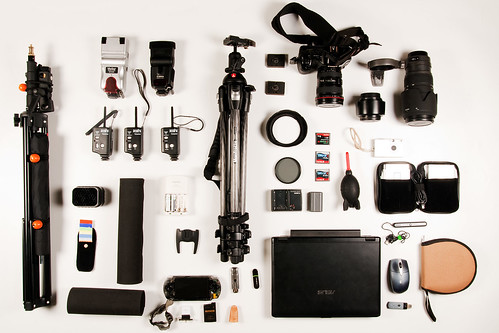
photo source
Digital photography is progressing almost as fast as the computer industry. Mega-pixels are multiplying faster than you can count them. As with all advances in technology, a higher price tag is attached. So, how do you upgrade your digital photography studio with out breaking your budget?
Let's go over a few ways to do just that.
Upgrade your Digital Photography Studio - Don't Buy New
The more mega pixels the better, I know. But, if you are using a 5.0 mega pixel camera now, wouldn't a 6.0 one be an upgrade? There is no need to spend the extra $3000 to get the newest 10 mega pixel digital camera.
There are plenty of used camera stores to find newer equipment that will fit your budget as well. KEH offers a huge selection of both new and used digital camera equipment, all of which has been cleaned and tested.
Let's not forget about eBay either. The deals there on new equipment are sometimes better then buying older used equipment. You never know when some college kid is going to sell off his $3000 digital camera just so he can make rent.
Upgrade your Digital Photography Studio - Compensatory Upgrades
Find way to stream line your business. Odds are, you don't have a lot of people working at your digital photography studio. So, you probably wont be buying equipment that saves you money by eliminating workers. Still, there is always new software coming out to help you stream line your business.
Such software may be expensive at first, but will be worth the price. Even if the software does nothing more than free up two hours in your work day, that is two more hours to make money. That is two more hours to see customers. Those customers could then turn into lifetime customers who bring your repeat business and great word of mouth advertising. All because you freed up two hours in your work day.
Upgrade your Digital Photography Studio - Upgrade Only What You Need
Upgrading your digital photography studio doesn't mean you have to spend a fortune on new gear, lights, printers, computers, and what have you. Take some time to really identify what it is in your digital photography studio that needs to be upgraded.
Lets say you bought an expensive sub dye printer years ago to start printing photographs in house. 60,000 prints later, it's just not what it used to be. This doesn't mean you have fork over a huge amount of money to buy a new one. You could out source your printing for a while or you could even look into getting the printer refurbished by the manufacturer.
Upgrade your Digital Photography Studio - Upgrade Your Staff
Not every digital photography studio upgrade is a piece of expensive new gear. Invest some of your budget by training your staff. If you have other photographers working for you, try spending some money on a training workshop. The more your employees know about their job, the better they are at it. These workshops will help increase your staffs skills, but it will also help them get a better picture of what you want. Being on the same wavelength with your employees will also help them operate more efficiently
If you have complicated software programs, consider having a sales rep come out and teach your staff about the software. This goes back the same point, the more your employees know, the better they operate. Often, sales reps will be more than happy to come out and teach refresher courses or how to use new programs free of charge. After all, the happier you are with their product, the more you will buy from them in the future.
These are just a few ways to upgrade your digital photography studio with out breaking your budget. There are always ways to pinch pennies if you think about. The biggest obstacle to get over is the, must have the new stuff, mentality. You almost never need the new stuff, it is almost certainly nothing more than a want. Think before you buy and you are sure to save money in the now and make more in the future.
Saturday, February 26, 2011
Tips for Breaking into Sports Photography
source,image source
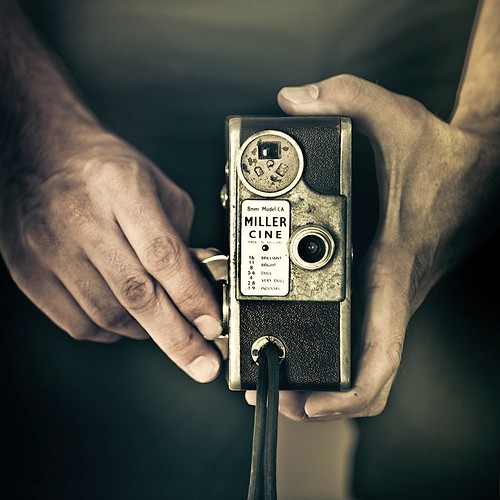
Winthrop University, Rock Hill, SC, student photographer Chris Osborne hopes his experience in sports photography will take him to the next level - his goal for every shot is "Sports Illustrated Cover".
Osborne explains how a sixth sense is valuable in sports photography, but without the basics of photography, you will still miss the shot.
What first attracted you to photography? How did you get started yourself?
Photography was something I could do since I have always been able to see how I wanted things to look. I have started and restarted a few times. My first camera was a 110 mm back in 3rd grade. I moved onto other interests until college, where I got a Coolpix L3. It is good for general use, but trying to shoot basketball did not work at all. So, I purchased a Rebel XT and have not looked back.
What photographers - well known or unknown - inspire you?
Beyond the sports photography culture, two unknowns got me where I am today. The first is my sister. She says that I stole her interest in photography and will not hold back any criticism of my work. The second is Paul, a fellow photographer at the school paper. After seeing one of his pictures in the paper and not liking it at all, I decided that I could do a better job and filled the other sports photographer position. Only later did I learn that an editor and not Paul made the cropping decisions.
What equipment do you use? Is there a certain piece of gear you could not live without?
I am currently using a Canon Rebel XT with the kit 18-55mm lens, Canon 50mm 1.8, Canon 75-300 4-5.6, and a Tamron 28-200mm 4/5.6. My only other add ons are a Canon battery grip and a polarizing filter. Being on a college student budget, I do not buy new equipment unless I will really use it. But if I had to pick one item that I couldn't live without it would be the battery grip. I missed too many shots by flipping the camera the wrong way to shoot vertically or simply missing the shutter button.
Do you have any goals in mind with your photography?
For my sports shot, there is always one basic thought running through my mind - Sports Illustrated cover. I would love to have one someday. For everything else, I think about if I could see the shot hanging on someone's wall. If I cannot, I find something that fits that requirement.
What do you feel are your strengths and weaknesses in sports photography?
As much as I hate to say this one, one of my strengths is that I have a camera that can handle the speed and lighting at college sporting events. Beyond that, I am able to have a personal relationship with most of the athletes and am able to predict fairly well what is about to happen. My weaknesses are that I am still too slow at times to get the shot that I want, despite knowing almost exactly what is about to happen and that I have a tendency to tilt my camera. Also, where the Winthrop athletic department lets me go during games limits what I am able to shoot.
What does it take to be a quality sports photographer?
To be a quality sports photographer, you have to be a little bit psychic. By that I mean that you need to be able to know where to point the camera to get the shot. Some sports are easier than others. What sports do you like to shoot? I like to shoot basketball and volleyball most. They are high intensity and usually have something new to get every time. I like baseball the least because most of the shots are just excessively similar.
What post-processing tools/software do you use? How much does that influence your photography?
When I want better control over the photograph, I will use Photoshop 7 or Gimp depending on which operating system I am working under (desktop runs XP while laptop is in the process of switching over to Linux). I use Picasa for basic editing such as cropping and overall brightness/contrast. I sacrifice the overall control for speed when I have to turn things in to the school paper.
What advice would you give new photographers?
A) Don't get discouraged. Photography is an art, which means you will have to work at it.
B) A good photographer can overcome bad equipment, and good equipment will not make you a good photographer.
C) Less time editing your photographs means you'll have more time to take more, so get things right in camera as much as possible.
D) Try to see all of what there is to shoot, not just the stereotypical snapshots that everyone else will find.
Check out Osborne's photography at http://sapidexistence.com
Where to Find Great Black and White Photography Online

credit
Black and white photography looks great in any décor. You can find just about anything, in any size, to match just about any room. Plus, the neutral tones of black and white photography ensure that it will match just about any color scheme. Here are some of the best places on the web to purchase black and white photography.
AllPoster.com
AllPoster.com is a fantastic site for cheap artwork. Now, cheap doesn't mean poor quality - quite the contrary, in fact. You can find just about anything - traditional paintings, classical art, black and white photography, large posters of bands, musicians, movies and more. They also offer framing.
My Top Pick: "City Street Signs" by Nelson Figueredo - $24.99 (Price doesn't include shipping and handling, or optional framing.)
Why I Chose This Piece: I love New York, more importantly - I love Broadway. Of course, Broadway and West 34th Street is practically the center of the theatre district. It's a great way to bring a little bit of Broadway right into my own home.
The Wall Art Store
This online store has a lot of fantastic, very 'artsy' black and white photos. They offer free shipping and all of the photos come framed, they even offer a few different selections for matting and frames. However, prices can run you from $55 dollars and all the way up to $919. Ouch. However, the quality is very high - so you can be sure you're getting your money's worth.
My Top Pick: "Stonehenge Sunrise" by Matthew De Haven - $50.00 (Price does not include shipping, handling or frame.
Why I Chose This Piece: I love Stonehenge, it's a fascinating place. The fog adds to the mystery of the structure and it's a great piece to add to a global photography collection.
Artful Home
This website offers a lot of wonderful photographs, but the prices run fairly average. The bottom line photographs start at $110 dollars and run up to several thousand dollars - so this isn't the most budget friendly site. However, if you've got the extra cash lying around, it's a great option and chances are you'll spend similar amounts at local art studios, especially if you live in a metropolitan area.
My Top Pick: "Winter Trees I" through Phoenix Galleries - $299.00 (price includes free shipping as well as framing and matting.)
Why I Chose This Piece: This particular photograph would be great for my fiancé's office. He loves the look of trees in the winter, so this is a great piece for him.
AbsoluteArts.com
Absolute Arts caters to the United States, the UK, China and more - and their prices range anywhere from $10 to $1,000,000. With more than 2500 works of art, you'll be sure to find exactly what you're looking for with this website.
My Top Pick: "Merced River Ice" by Ron Gallmeier - $330, Small; $665, Medium; and $1000, Large.
Why I Chose This Piece: Again, this is another piece I know my fiancé would really appreciate. Plus, I love the look of the water, the snow and the trees - so it's something we would both really enjoy in any room of our home.
So whether you've got $10 or $10,000 - you'll be sure to find the ideal pieces of black and white photography to fit your home décor and personal tastes.